
Hayes Court and the Arrival of The Church of England
- Annalisa Whitfield
- Apr 6
- 3 min read

Updated: Apr 7
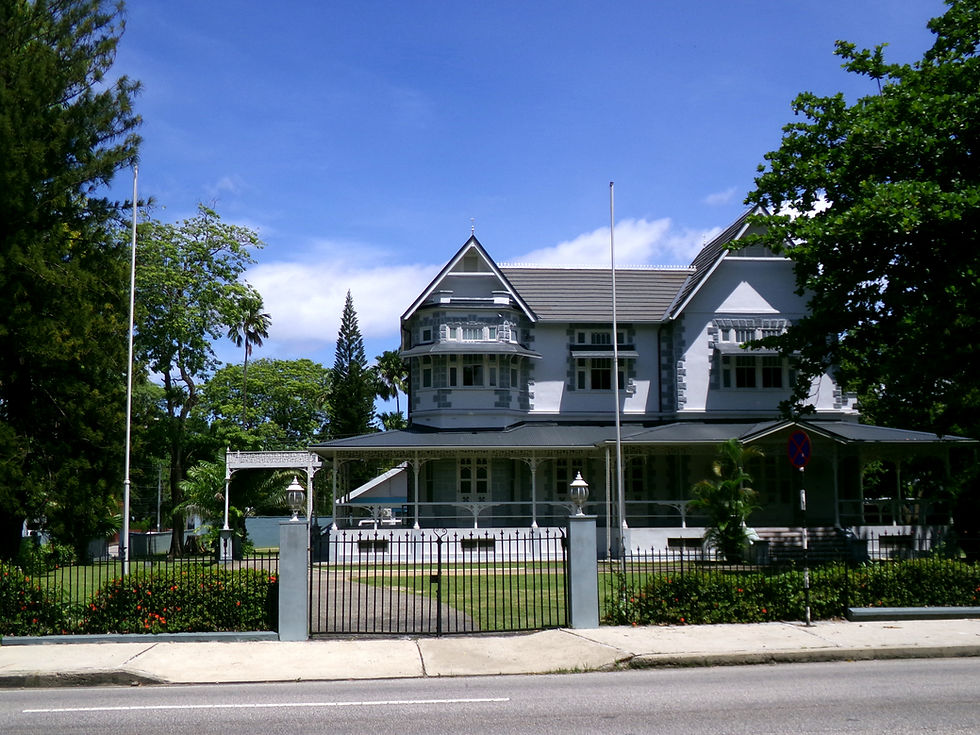
Perhaps the most understated of the Magnificent Seven is Hayes Court. The end of its construction in 1910 would mark the completion of the Magnificent Seven, so although it is the second building in sequence, it was actually the Seven’s final entry. It was originally conceived of in 1904, the year when its grand German Renaissance neighbour was completed. Credit for its conception is given to a Mr. Prothero, presumably a member and benefactor of the Anglican Church in Trinidad. Hayes Court was intended and still currently serves as the official residence of the Anglican Bishop of Trinidad and Tobago.
The Anglican Tradition
The Anglican Church’s presence in Trinidad naturally began with the island’s capture by the British in 1797. The Anglican tradition dates back to the English Reformation, and since the Church's designation as England's state church, it has been known as the Church of England. The introduction of Anglicanism to the global community came through the expansion of the British Empire, although many Anglican communities today are governed independently of the English mother church. While the entirety of Britain was not Anglican during the colonial period, England held political dominance, and by extension, so did its state church in the religious landscape of the British Empire.
The Church of England in Trinidad
The British were in charge, and the British were very Anglican, but Trinidad in the late 1700s was very French and very Catholic, so the Church of England had its work cut out for it. Work began soon with the establishment of the first Anglican church on the island, the Trinity Church. The church would burn down in 1808, but construction of the Holy Trinity Cathedral on the same site would begin in 1816. The Cathedral would be consecrated in 1823 and is now one of the oldest surviving churches in the capital, Port of Spain. Trinidad would get its first Anglican Bishop a few decades later when it was separated from the Diocese of Barbados and made its own diocese. Bishop Richard Rawle served as the island’s first Bishop from 1872 until his death in 1889. Bishop Rawle’s successor, Bishop Thomas Hayes, is the man after whom Hayes Court would be named.
Hayes Court: A Home for the Bishop
Although named after Bishop Thomas Hayes, the residence’s first occupant was Hayes’ successor, the Right Reverend John Francis Welsh. Bishop Hayes had died in the year that Mr. Prothero proposed that a residence for the Anglican Bishop be built, and so it was named after him in honour. Also named after the second Bishop is Hayes Street – one of the two streets that border Hayes Court, the other being Maraval Road, where all the Seven sit along.
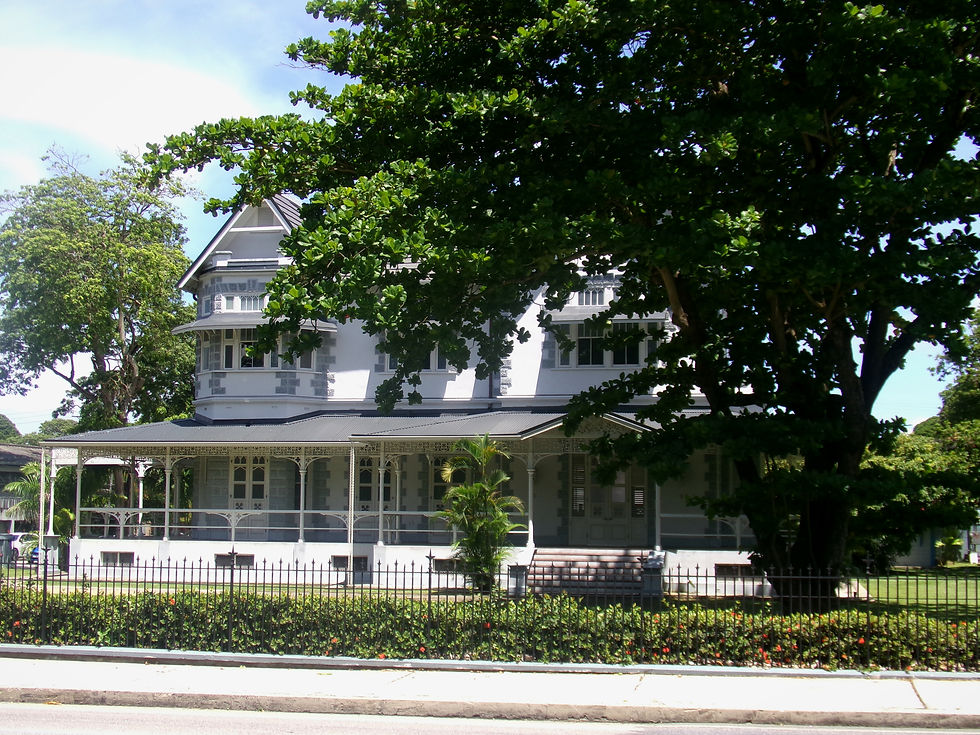
Hayes Court, with its quieter and less ostentatious presence than its neighbours, is noted for having French, English, and Scottish architectural influences. Some sources note it as being built in the style of French and English country homes or designate it as having a French colonial style. Others also note its Scottish cast iron details on its verandah columns and beams, as well as its Demerara windows, an accommodation invented for colonial homes in tropical climates. Its presence amongst the Magnificent Seven reminds viewers of the legacy of the Anglican church in Trinidad, but also of how religious tides have changed over the course of the centuries.
Sources
A Magnificent Nine: Historical Facts on Nine Buildings in Trinidad and Tobago (1976), published by the Public Relations Division, Office of the Prime Minister, Trinidad and Tobago
The Making of Port-of-Spain: The History of Port-of-Spain Volume 1 1757-1939, Second Edition (2007) by Michael Anthony
Bishop Thomas Hayes, entry on the website of The Anglican Church, Diocese of Trinidad and Tobago
Hayes Court entry on the National Trust website
The Anglican Church in the Diocese of Trinidad and Tobago, The Holy Trinity Cathedral website

Comments